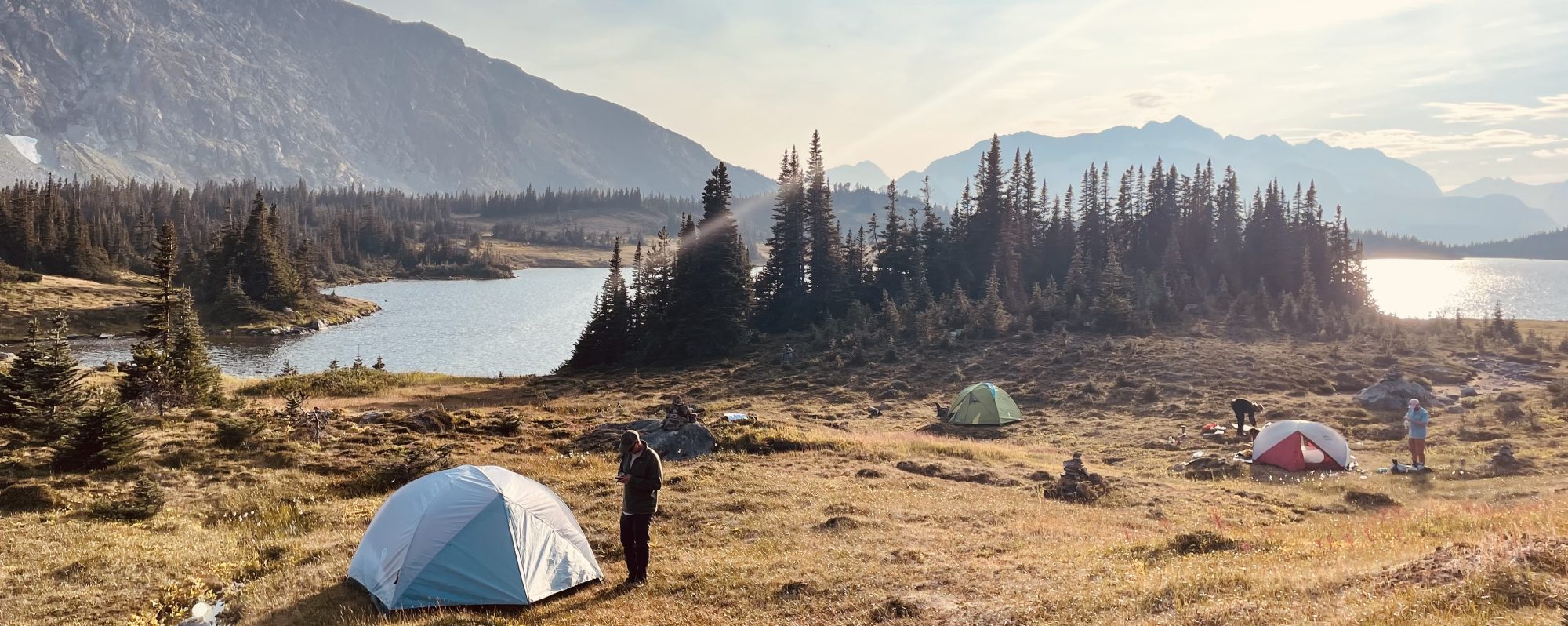
Packing for a paddling trip might seem like a simple task, but the right gear can make all the difference between an enjoyable adventure and a grueling one – especially if rain or maybe even snow are in the forecast. Whether you’re gearing up for a weekend escape or a week-long expedition, having the essentials ensures you’re ready for whatever comes your way. In this guide, we’ll break down everything you need to pack to keep your adventure safe, comfortable, and unforgettable (in the best possible way). Plus, we’re giving you an inside look at the packing list we rely on for every trip!
Before we dive into the details, let’s first highlight the essential items you’ll need to ensure your paddling trip is both safe and successful. These must-have items include:
- Bag
- Sleeping set-up
- Shelter
- Sleeping bag & mat/pad
- Camping kitchen items
- Food
- Stove & fuel
- Cooking pot and/or container, utensil
- Water treatment system
- Water bottle and/or bladder
- Clothing & footwear
- Safety and emergency items
- Navigation tools
- Repair kit & tools
- First aid kit
- Communication device (e.g., InReach)
Disclaimer: Everyone has different preferences when it comes to packing – some may prefer a minimalist approach, swapping a tent out for a hammock, reducing the amount of clothing they bring, or opting for cold-soaked meals instead of a stove. Ultimately, you should pack in a way that feels comfortable for you. If you’re a beginner, it’s important to bring what will make you feel secure and prepared. As you gain more experience, you can refine your packing list to suit your personal style and needs!
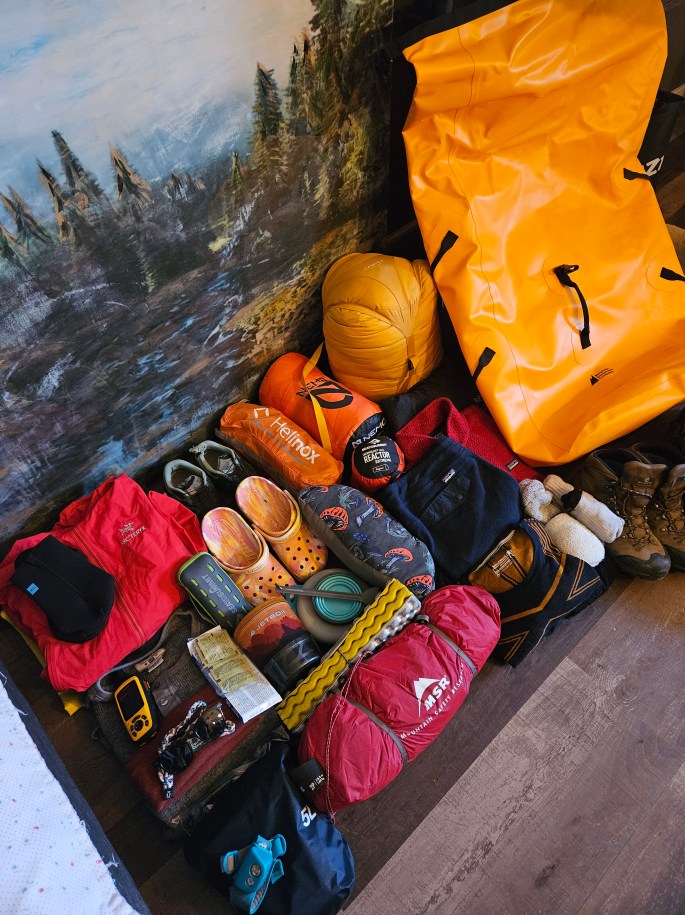
Group items – Based on 4 people
We prefer to minimize the amount of gear we bring whenever possible, ensuring we only carry what’s necessary. Not every item needs to be packed by each person in the group. For example, we share barrels for our food, as well as stoves and fuel, to keep our load light and efficient. Below is a list of the group items we bring when travelling with four people. If we had more in the group, we’d bring extra of certain items, like an additional Jetboil or backpacking stove:
- Camp Items
- 2 Jetboil stoves
- Fuel (the amount depends on the trip’s length and altitude. Be sure to calculate how much you’ll need but always bring more fuel than you think you’ll require, just to be safe).
- Water filtration or purification system
- Environmentally friendly dish soap & scrubby
- Shelter & Camp Improvements
- 2 Tarps (one larger, one smaller)
- Rope
- Silky Saw
- Fire Starter & Lighters
- Safety
- First Aid Kit
- Insect Repellant
- Repair Kits
- For Canoes
- Gear tape for repairing rips and leaks in clothing or sleeping systems.
And of course, whatever canoes and paddles you choose to bring or rent!
Personal items
Each person will need to bring their own personal gear. While some items are essential, others may be considered more of a luxury.
- Portage Bag or Backpack
- Tent
Note: Depending on the tent’s capacity, the number of people in the group, and the nature of the trip, every person may not need to bring a tent.
- Sleeping System
- Clothing & Accessories
- Footwear
- Kitchen Things (utensils, containers, mugs)
- Water Purification & Storage
- Hygiene
- Safety Items
- Bear spray, airhorn, walkie talkies
- Luxury Items
- Chair
- Pillow
- Book/Journal
- Powerbank
- Crib board & Cards
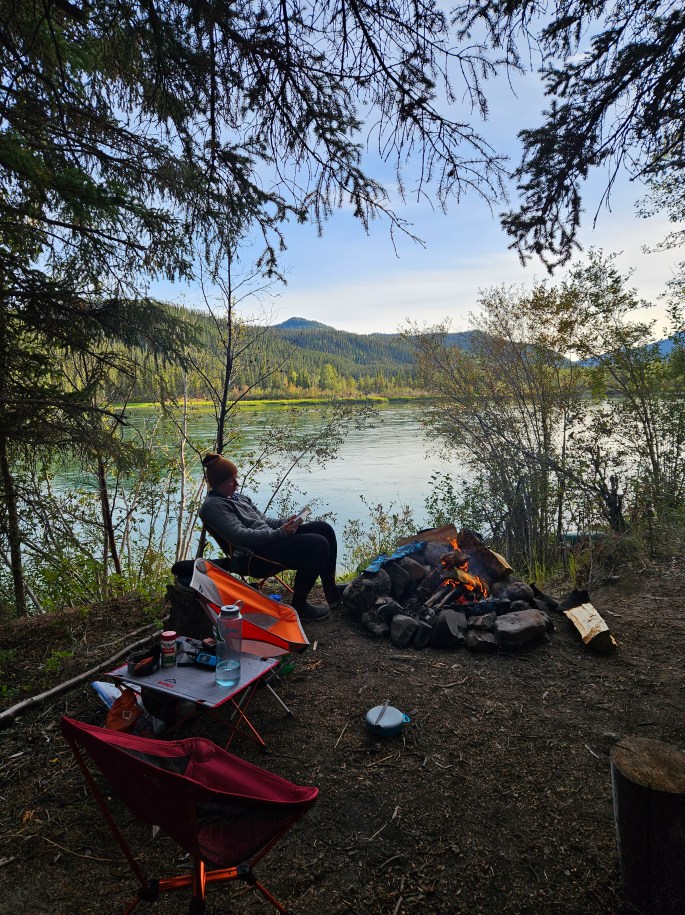
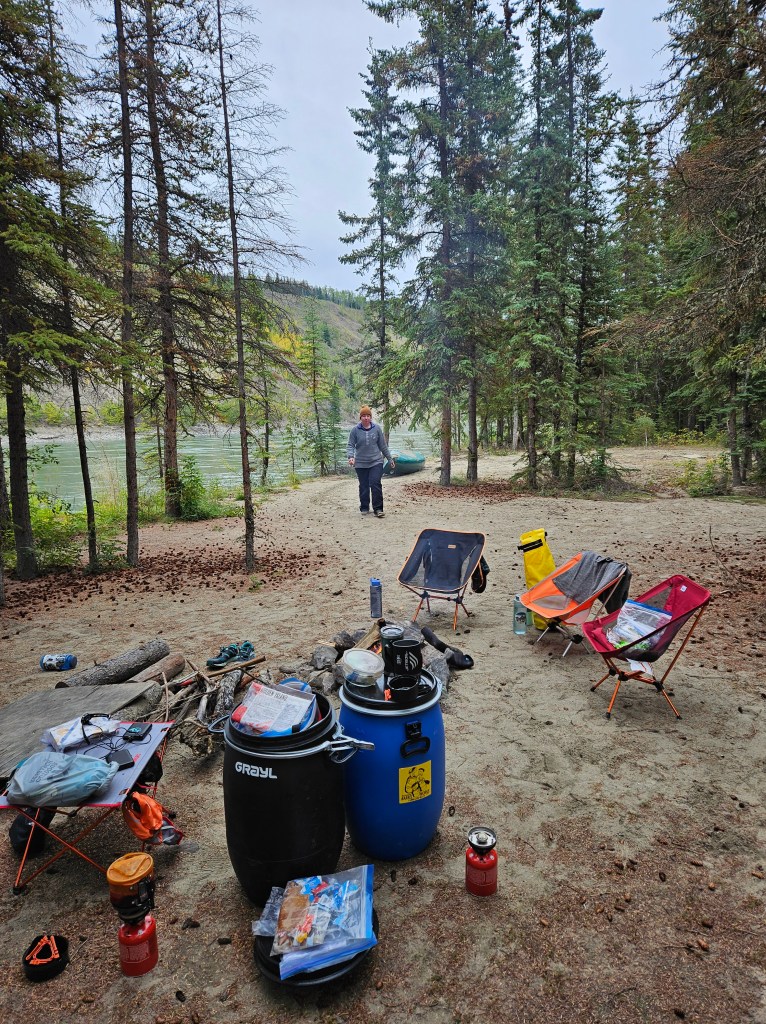
Brief gear breakdown
Bags
When it comes to choosing bags for your trip, you have several options. For paddling only trips, we typically use portage bags, which are large dry bags equipped with a backpack harness system for easy transport. Before switching to portage bags, we used backpacking packs, which work well with a bit more attention to keeping your gear dry. Some may opt for barrels and totes instead – barrel harnesses are available and can be particularly useful if portaging is required. If your trip doesn’t involve any portaging, alternatives such as dry duffel bags can also be a great option.
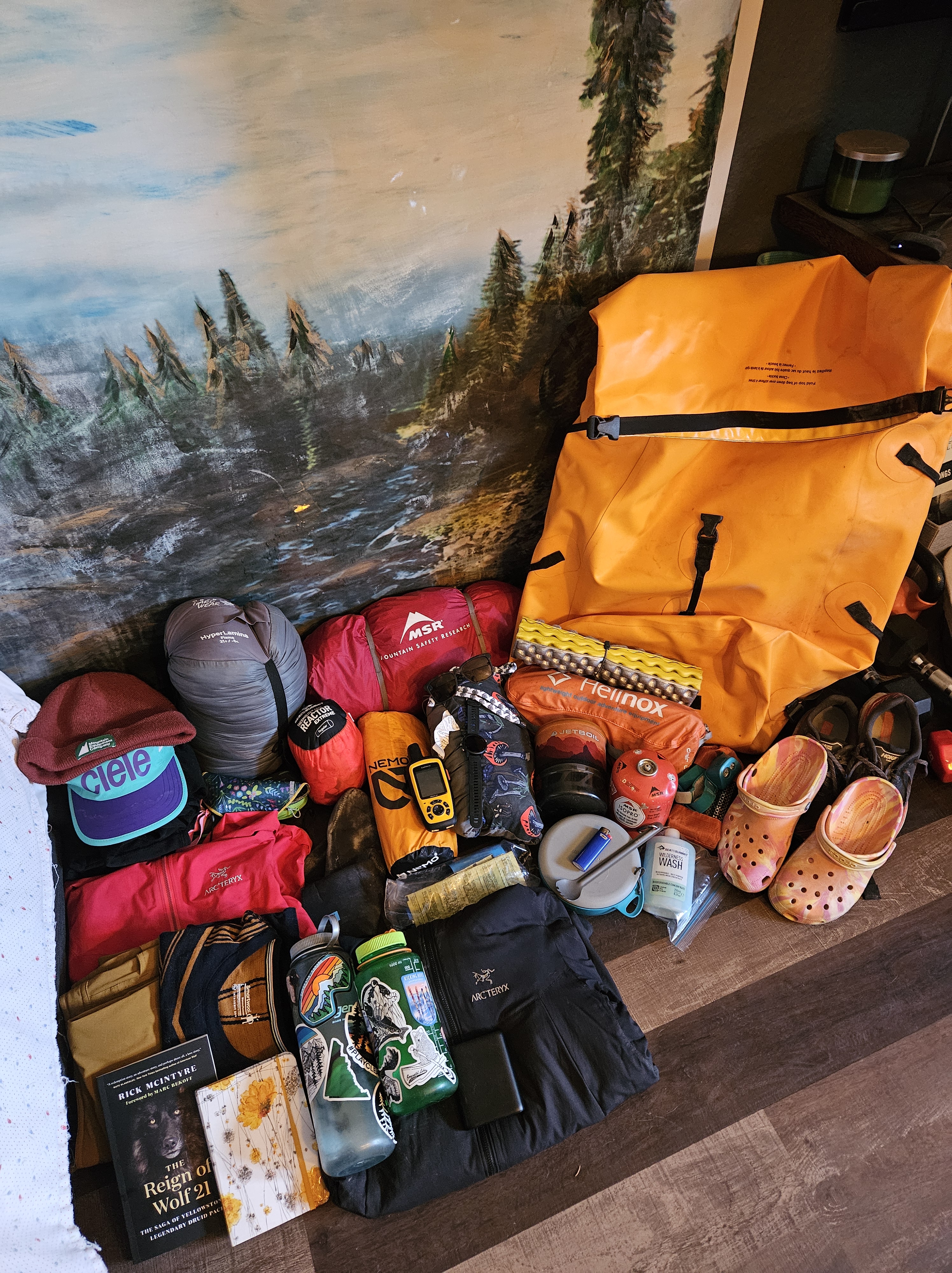
- We use the 115 L MEC Portage Bag
Tent
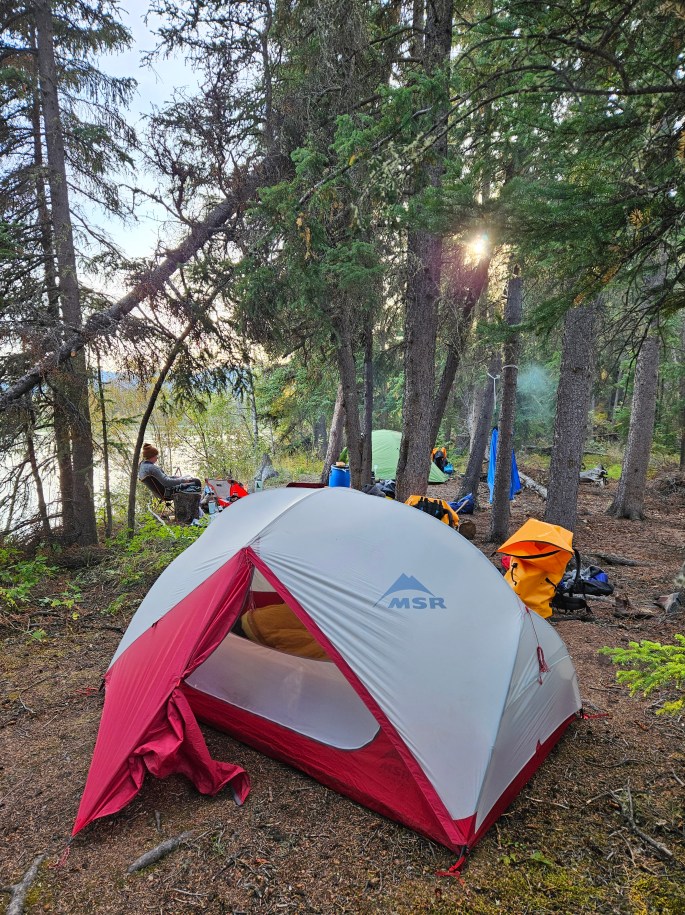
Your tent is often the largest piece of gear in your pack, but on a paddling trip, you may not feel as restricted by size and weight compared to a backpacking expedition. That said, depending on campsite availability, a smaller footprint can be helpful when fitting into more compact locations.
- While we have a few different tents in rotation, our go-to option is the MSR Hubba Hubba Tent, which consistently delivers on comfort and reliability.
Sleep System
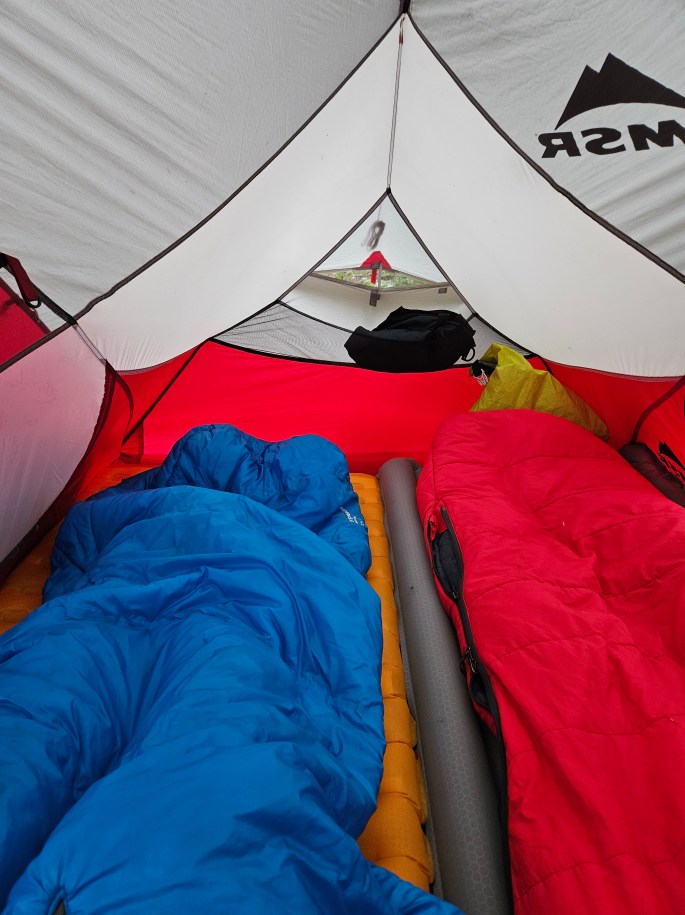
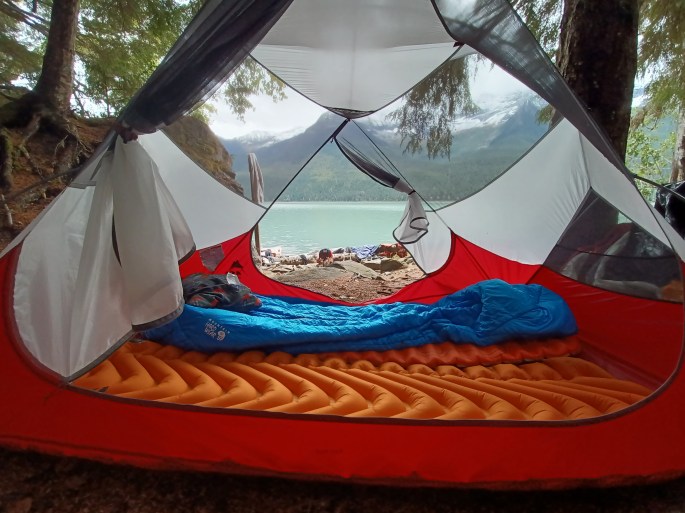
Your sleep system consists of two main components: the sleeping bag and the sleeping pad.
- Sleeping Bag
- The main decision is whether you would prefer a synthetic or down bag. Down bags tend to be a bit pricier but offer better compression, making them easier to pack. Synthetics bags are a great option for wetter climates since they retain warmth even when damp.Our go-to brands include Mountain Hardwear, Marmot, and Nemo. For fall camping, we almost always pack sleeping bag liners, which can add a significant amount of warmth to your setup!
- Note: You may consider quilts for your sleeping system as they are becoming more popular, especially for summer camping.
- Sleeping Pads
- There is a wide range of sleeping pads, from foldable mats to inflatable pads (either breath-inflated or using a pump sack), as well as self-inflating options.
- We use brands such as Therm-a-Rest and Nemo for their compression and comfort.
Pro Tip: Don’t forget to bring along gear repair patches – these little lifesavers are essential if your pad springs a leak or hole while out in the wild!
Clothing and Accessories
When packing for an adventure, the most important things to keep in mind are layers and no cotton! You want clothing that keeps you warm and dry while remaining comfortable. You also want to avoid overpacking, as it leads to unnecessary weight and takes up valuable space. We typically pack at least two outfits – one to wear and a spare in case you get wet.
Here’s what we usually bring:
- 2 x long sleeve shirts
- 1 x t-shirt
- 2 x quick-drying pants
- 2 x quick-drying sports bras
- 1 x sleep clothing
- 1 x underwear per day (this is a bit of a luxury for us, as we like a fresh pair every day – but you may prefer to limit this)
- 3 x merino wool socks
- Insulated jacket
- Rain pants
- Rain jacket
- Toque
- Baseball hat/sun hat
- Sunglasses
This list may vary depending on the time of year. For instance, in the middle of summer, you might opt for more t-shirts than long sleeves or throw in a pair of shorts. If you’re heading out in spring or fall, you may want to pack gloves for added warmth.
Footwear
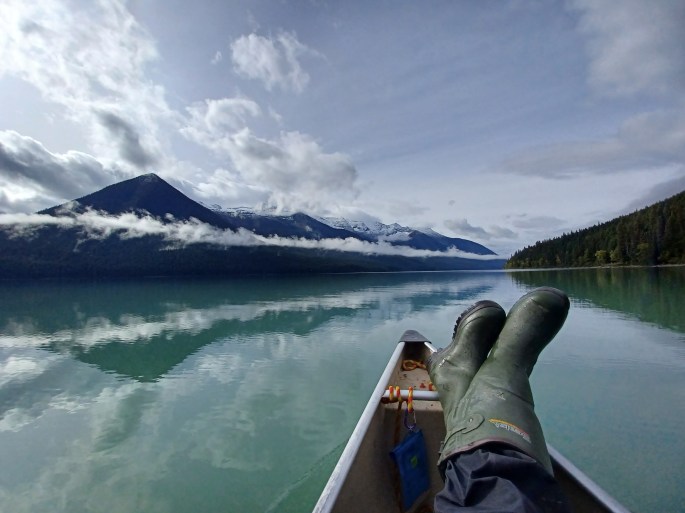
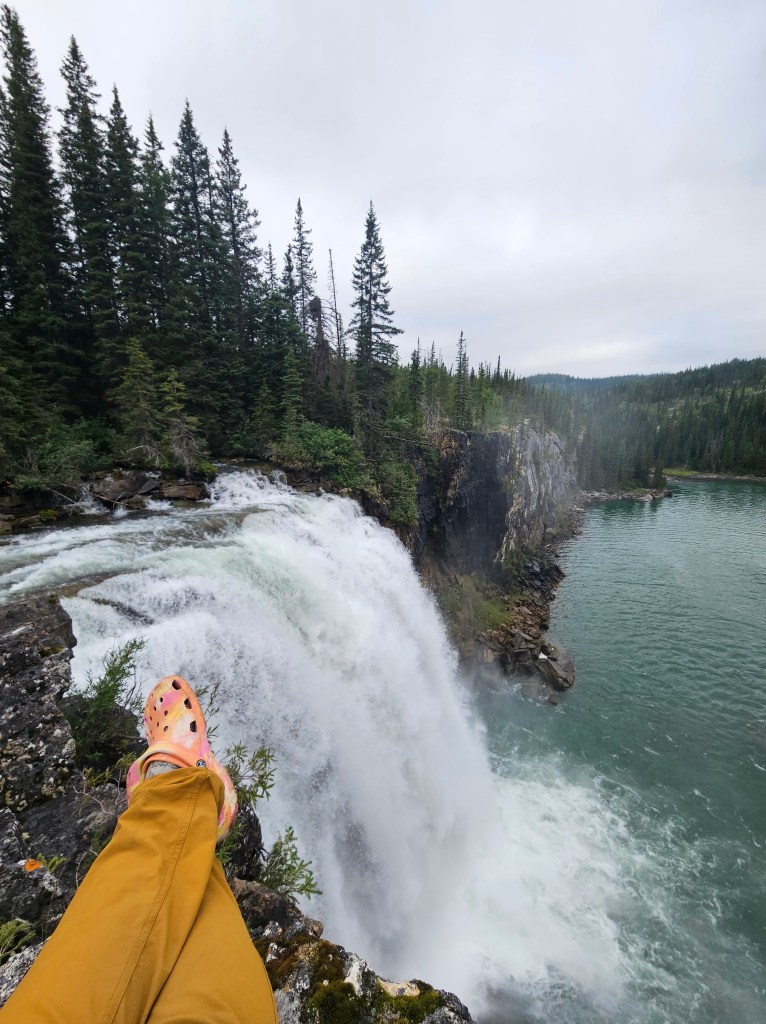
When it comes to footwear for paddling trips, you have plenty of options. You might choose rubber boots, Crocs, trail runners, or sandals – each with its own benefits. One important consideration is whether you’ll be doing any portaging and what time of year you’re heading out.
For us, we typically bring Crocs paired with neoprene socks for paddling. If portaging is involved, we’ll throw in a pair of trail runners or hiking boots.
Crocs also double as our camp shoes since they dry quickly, making them perfect for around the campsite and do not require us to bring separate camp shoes.
Note: On flat water trips in the fall, we sometimes opt for rubber boots. However, it’s generally recommended to avoid them, as they can fill with water if you end up tipping over, and it’d be a struggle to get them off in the water. If you do decide to wear rubber boots, make sure they’re snug around your legs to minimize the risk.
Kitchen Things
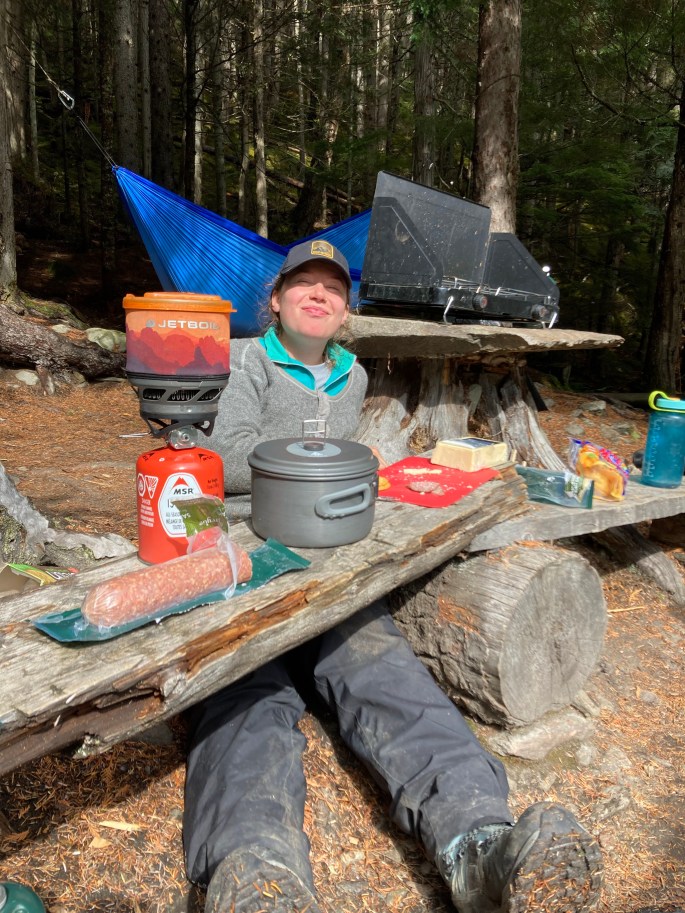
Many of our kitchen items are shared within the group, such as stoves, fuel and food (see above). However, there are a few essentials that each of us brings individually, including containers to rehydrate our dehydrated meals, eating utensils, mugs, and water bottles. When paddling, we like to bring travel mugs so we can enjoy coffee on the water, knowing it will stay warm and won’t spill!
Pro tip: A long spork (i.e. there is one made by Sea to Summit) is worth having in your camping gear. It’s perfect for eating out of freeze-dried food packets or stirring meals!
Water Purification & Storage
We bring filtration systems as group gear, but each of us also carries purification tablets as a backup.
Individually, we each bring a couple of Nalgenes to store water. We prefer Nalgenes because they’re lightweight, durable and versatile. On chilly evenings, you can boil water, pour it into your Nalgene, seal it tightly and toss it into your sleeping bag – turning it into a makeshift hot water bottle to keep you warm and cozy through the night!
Hygiene
Hygiene items that we bring along include:
- Travel-sized toothbrush and tootpaste
- Insect repellent
- Toilet paper, hand sanitizer and a trowel
- We keep these in their own ziplock bag or small dry bag
- The trowel is essential when there are no outhouses.
- Sunscreen
- Lip Balm that includes SPF
Safety
Many of the safety items we bring are shared within the group (see above). We tend to enhance our First Aid Kits with extra band-aids, medications and emergency blankets. We also bring a couple of InReaches, repair tools and fire starters for the group.
Individually, each of us carries a can of bear spray, keeping it easily accessible, as well as a reliable light source. We prefer headlamps since they’re more versatile than lanterns, offering hands-free convenience and adjustable lighting.
Luxury Items
Everyone has their own different items that they consider a luxury item, but here are a few that we always bring along:
- Chair
- We bring foldable backpacking chairs – perfect for a comfortable evening around the fire.
- Pillow
- While you could use a bag of clothes as a pillow, since we’re out there for several days, we prefer to bring small inflatable or compressible pillows for better sleep.
- Book and Journal
- A book or e-reader is nice to have when you have a little down time and we like writing in our journals to capture memories from the day, so we can reflect on the journey later.
- Powerbanks
- Since our phones double as cameras, we bring powerbanks to keep our phones and InReaches charged when needed.
- Crib board, cards and dice
- A few games can make downtime more enjoyable. We bring along a foldable crib board, cards, and dice for some fun if we get off the water early or need to pass the time.
Tips
- If you’re like us and continue adventuring after your paddling trip, pack a small separate bag with additional clothing and kitchen supplies (e.g., a two-burner stove, larger utensils – your car camping gear). Leave it in your vehicle for the next leg of your trip!
- Dry bags and compression bags make a big difference in packing and organizing your gear – especially for portage bags, which can be tricky since they usually have one large compartment.
- Keep a dry bag within reach in the canoe for easy access to essential items throughout the day (e.g., an extra layer, rain jacket, snacks, toilet paper, sunscreen, lip balm, etc.). This way, you won’t have to keep digging into your portage bag or backpack.
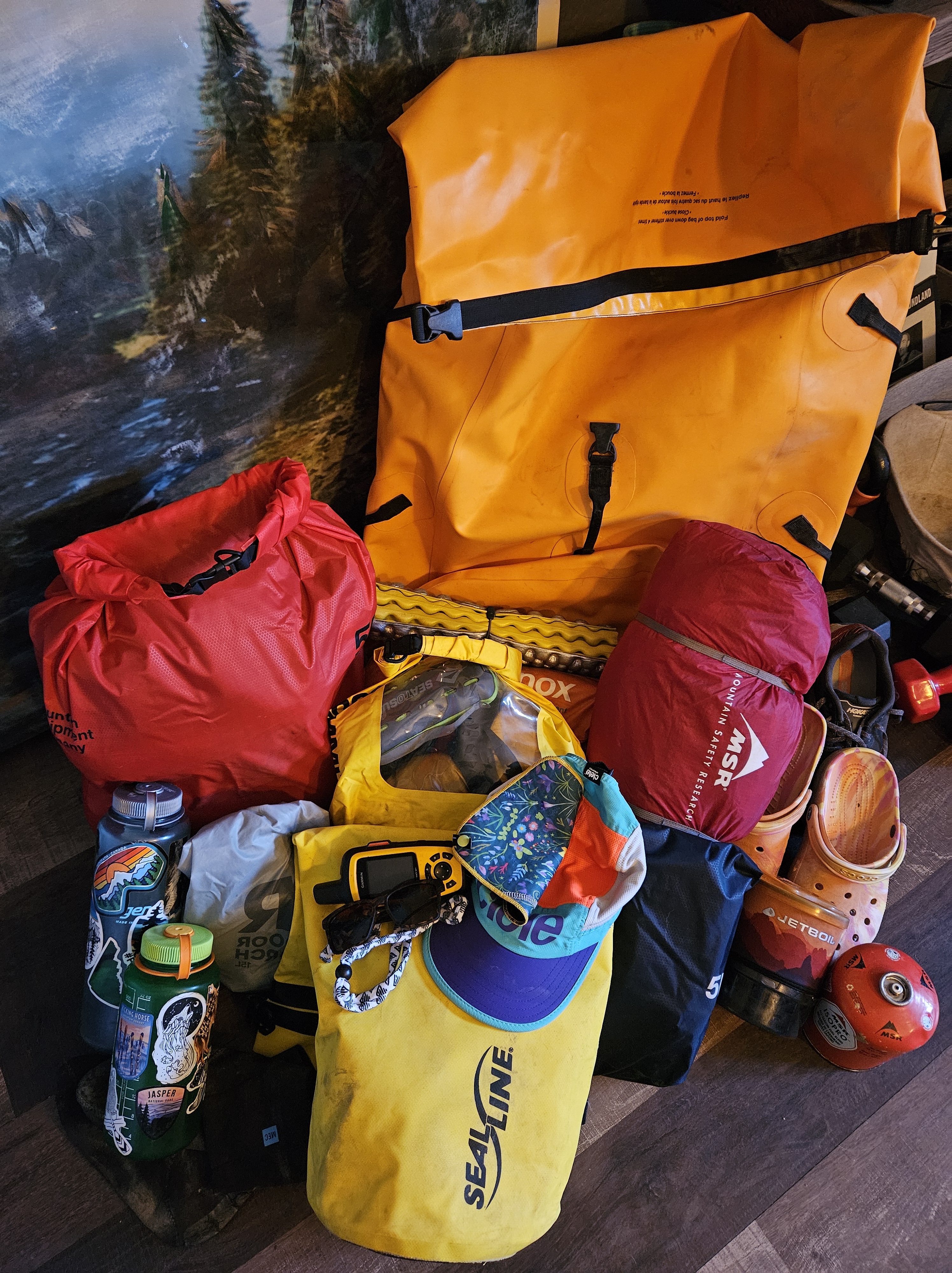
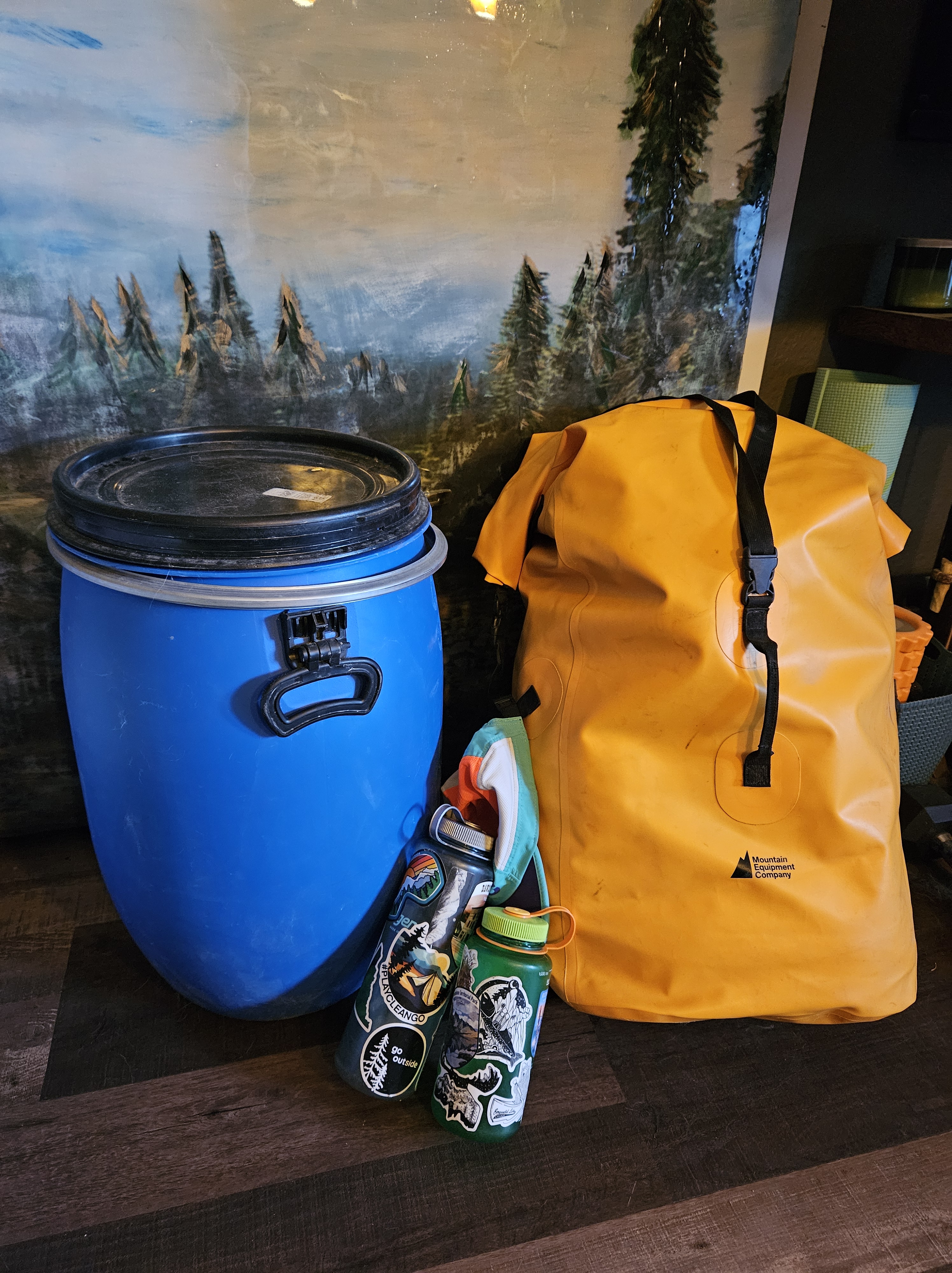
NOTE:
Some of the items on this list are geared toward longer, more remote trips. For weekend getaways or shorter excursions, your camp kitchen items and food may be a little different. For instance, when we paddled the Bowron Lakes Canoe Circuit, we prepped three days’ worth of food, froze it, and brought coolers to store it in. This meant we also brought a pot and a two-burner stove for cooking and reheating meals. It was a different type of trip, as we did it in late September and had the luxury of using a cart for portaging. For longer, more remote trips, we typically dehydrate our food and rely on Jetboils for cooking.
stay tuned for a detailed post on different gear options and how to choose!
Discover more from
Subscribe to get the latest posts sent to your email.
